
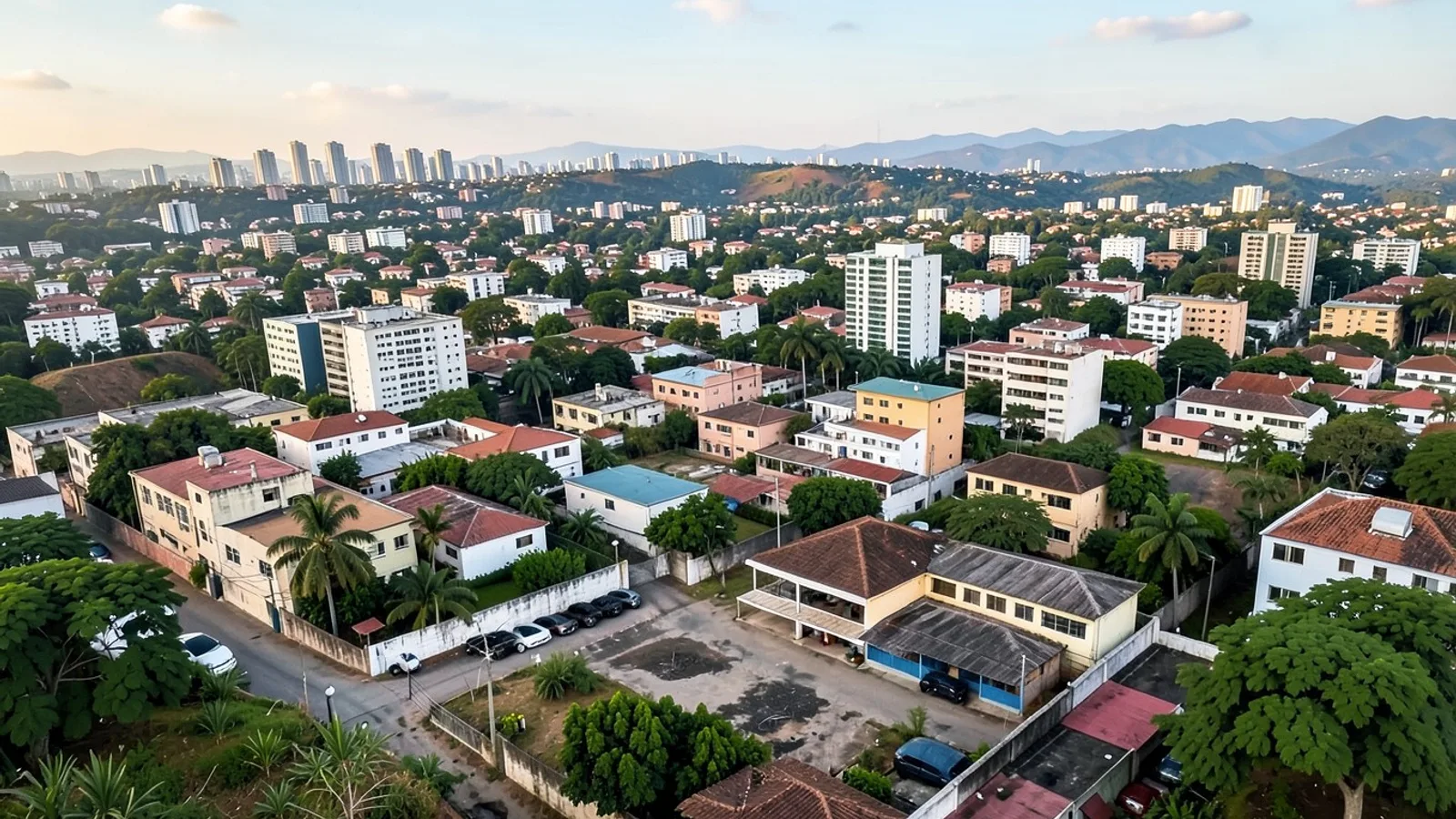
The acquisition, sale, lease and regularization of real estate represent significant property decisions for families, investors and companies in the municipality of Divinópolis, which has a population of 243,583 in the state of Minas Gerais. Urban dynamism and the development of residential subdivisions, gated communities, commercial warehouses and rural areas in the region require ongoing attention to the requirements of the Civil Code and public records legislation. Faced with complex contractual clauses, real estate certificates and tax risks, the preventive support of a real estate lawyer is crucial to ensuring the legal soundness of transactions and avoiding property losses that are difficult to remedy.
The habit of turning to a professional only after open disputes arise remains common, such as substantial delays in project delivery, prolonged nonpayment of installments or possession disputes between adjoining landowners. However, prior legal advice from this qualified specialist identifies hidden liens in the property record, past-due tax liabilities and structural defects in drafts before any amount is paid as a deposit or earnest money. A detailed analysis of the contractual terms protects the good-faith purchaser against creditor fraud or fraud against enforcement proceedings, providing legal stability to the parties involved. To understand the options for preliminary legal assessment in the city, interested parties can access the platform in Divinópolis and learn about the available resources.
Asset Protection and Dispute Prevention in Real Estate Transactions
In the Brazilian legal system, the fundamental principle applies that ownership of real property between living persons is transferred only through the formal registration of the deed of transfer with the competent Real Estate Registry. Entering into mere private commitments, colloquially known as unrecorded private contracts, or having simple de facto possession of the property does not confer legal ownership opposable against third parties. Anyone who carries out transactions based solely on unrecorded private instruments assumes high material vulnerability, remaining exposed to legal attachments resulting from civil, labour, or tax debts of the former owner who is still listed on the property registration certificate.
In this context, the role played by a real estate lawyer is to examine with technical rigor the chain of title, assessing whether the sellers possess full capacity and exclusive standing to convey the property. This prior investigation includes verifying the marital status of the sellers and the mandatory requirement of spousal consent, depending on the property regime applicable to the marriage or civil union. The absence of spousal consent can lead to the subsequent invalidation of the legal transaction, creating financial uncertainty for the buyer.
Another element of particular relevance is protection against eviction by operation of law, a legal circumstance in which the buyer loses possession or ownership of the asset due to a court order recognizing a prior right belonging to a third party. When drafting or reviewing preliminary purchase and sale agreements, the lawyer structures warranty clauses requiring full indemnification, sets precise deadlines for granting the definitive deed, and defines proportionate coercive fines in the event of default on the conditions agreed upon by the parties.
In transactions involving off-plan properties or units under construction, the contractual relationship is also subject to the protective provisions of the Consumer Defense Code and the rules governing real estate developments. Disputes arising from non-compliance with the legal grace period for delivering the building, charges for construction progress interest beyond the scheduled timeframe, and square footage discrepancies detected during physical inspection require well-founded intervention to serve extrajudicial notice on the developer or to pursue rescission or damages before the courts.
Real estate contracts, urban leasing, and possessory rights
Leasing relations governed by Law No. 8,245/1991 constitute another field where the technical guidance of a real estate lawyer provides stability and predictability to contracting parties. Clauses drafted without proper technical rigor often generate recurring disputes over periodic adjustment criteria, responsibility for property maintenance and conservation, and the definition of ordinary and extraordinary expenses in building condominiums. Technical intervention ensures balanced contracts, establishing clear deadlines and secure procedures in the event of early termination.
Regarding lease guarantees, the legislation strictly prohibits requiring more than one type to secure the same lease agreement, under penalty of nullity of the excess guarantee and the establishment of a legal infraction. Professional guidance steers the choice among a cash deposit, rent guarantee insurance, fiduciary assignment, or a third-party guarantee, verifying the guarantor's credit standing and the authorization of their spouse. In situations of repeated default, proper legal handling of default notices and potential eviction lawsuits for non-payment enables the repossession of the property and the enforcement of pending debts.
When it comes to non-residential or commercial leasing, legal support takes on an even more strategic role to preserve the commercial location and the investments made in the productive activity by the tenant. The timely filing of an action for the renewal of a commercial lease must strictly observe the statutory forfeiture period, which runs between one year and six months prior to the expiration date of the contract in force, in addition to fulfilling all cumulative legal requirements. At the same time, the tenant's legitimate right of first refusal is safeguarded should the owner intend to sell the leased property to third parties during the term of the agreement.
In the realm of possessory rights, prompt relief against acts of disturbance or dispossession prevents the consolidation of irreversible losses. The continuous exercise of peaceful and uninterrupted possession, with the intent of ownership and for the time period established by civil legislation, allows for the formalization of adverse possession as an original mode of acquiring property. Depending on the compliance of the documentation and the consent of adjoining registry owners, recognition may take place extrajudicially before the competent real estate registry office or require legal proceedings before the State Court.
Step-by-step document checklist for prior property verification
Hastily signing purchase and sale commitments or carrying out wire transfers without prior document verification is the main cause of real estate disputes. To protect assets and ensure good-faith third-party status in any transaction, following this technical verification checklist is recommended:
- Updated property deed certificate with full content and encumbrances: Issued by the competent Real Estate Registry of the jurisdiction, recently issued, to attest to the sellers' legitimate ownership and verify the absence of mortgages, judicial attachments, fiduciary assignments, usufruct, or judicial orders rendering assets unavailable;
- Certificate of clearance of municipal tax liabilities: A document issued by the municipal treasury proving the absence of outstanding debts related to the Urban Property Tax (IPTU) and related fees, given that taxes levied on property are propter rem in nature and follow the property regardless of any change of possession;
- Declaration of settlement of condominium fees: In the case of units within vertical or horizontal condominium developments, request a statement signed by the property manager or management company, accompanied by a copy of the minutes of the assembly that elected the representative, confirming the absence of unpaid regular dues or reserve fund contributions;
- Certificates of civil, tax, and bankruptcy case filings: Obtaining certificates from the State Court and Federal Court in the name of all sellers and their respective spouses, covering both the judicial district where the asset is located and the municipality of domicile of the contracting parties, in order to rule out collection proceedings likely to lead to insolvency;
- Certificate of Absence of Labour Debts (CNDT): Issued before the Labour Court to verify that the transferors are not listed as debtors in labour enforcement proceedings that could reach the transferred property through piercing the corporate veil or asset attachment;
- Verification of the architectural project and certificate of occupancy (habite-se): Verification with the municipal technical department to check whether the physical area built on the land matches the approved blueprint records in full, avoiding municipal administrative penalties, stop-work or usage injunctions, or obstacles to mortgage financing.
Judicial District of Divinópolis and regional real estate integration
Within the first instance of the State Court, civil, real estate, possessory, and public registry actions concerning properties located in the municipality are processed in the Judicial District of Divinópolis. The local courthouse is located at Avenida Dr. Paulo de Melo Freitas, 100 – Liberdade, Divinópolis - MG, CEP 35502-635. It is in this jurisdictional unit that civil law disputes, contentious adverse possession actions, judicial compulsory adjudications, evictions, and contractual enforcements are handled. Any appeals filed against judgments rendered in the district are reviewed by the Court of Justice of Minas Gerais (TJMG), located in the state capital, Belo Horizonte, and may reach instances of legal uniformity before the Superior Court of Justice (STJ) and the Federal Supreme Court (STF), located in the federal capital, Brasília.
Divinópolis exercises a prominent socioeconomic and functional centrality in the central-west region of Minas Gerais, establishing constant contractual and property connections with cities in its surrounding geographical area. In real actions involving real estate, the territorial jurisdiction rule of the forum of the location of the property prevails, requiring a detailed examination of the asset's exact location for filing judicial measures or executing public deeds.
This interaction is directly evident in the relationship with the municipality of Carmo do Cajuru, located just 13.3 km from Divinópolis. The execution of transactions involving residential areas, recreational country houses, and industrial land connecting residents of both localities is frequent. Hiring technical advisory services ensures that the recording of deeds and the payment of property transfer taxes strictly comply with the rules of the real estate registry jurisdiction competent for that territory.
Another significant flow of property assets occurs toward Nova Serrana, a municipality located at a distance of 31.3 km from Divinópolis. The expansion of industrial warehouses, commercial units, and urban subdivisions in the neighboring city drives transactions involving investors from Divinópolis. A meticulous legal review of certificates and contracts prevents the risks of acquiring areas with registration irregularities or administrative injunctions resulting from unlawful land subdivision.
Similarly, there is significant integration with Itaúna, 33.7 km away from Divinópolis. The exchange of housing and commercial transactions between the two cities requires attention to lease contract rules and the assessment of tax liabilities on the transacted properties. This regional contiguity is also evident with Cláudio, a municipality located 35.8 km from Divinópolis, where real estate transactions related to the productive sector and rural smallholding areas require thorough verification of property boundaries and land parceling, preventing possessory disputes between adjoining owners.
Ethical rules, formalization of fees, and contact through the application
The professional practice of law is guided by strict compliance with the ethical standards established by the Brazilian Bar Association (OAB). In advisory consultations, legal opinions, or in representing clients in contentious proceedings before the Judiciary, the real estate lawyer acts with technical independence and transparency regarding the risks inherent to each legal measure. In strict adherence to the deontological rules of the profession, no professional may offer guarantees or promises of outcomes regarding judicial claims or registration procedures, since final judgment and the qualification of title deeds are the exclusive responsibility of judges and registry office officials authorized by the Public Authorities. Those who lack the financial resources to afford contractual fees may seek assistance from the Public Defender's Office for free legal aid.
Private representation requires that legal fees be agreed upon in advance and formalized in writing in a dedicated contract prior to the start of any legal measures. The service agreement must outline in detail the stages covered by the representation, the amount corresponding to consultations or the handling of judicial proceedings, and the breakdown of operational expenses resulting from notary and registration fees, public certificates, and court costs, providing full financial predictability for the client. To learn about institutional contact options and available services, users can visit the platform's home page.
For those seeking prompt, secure, and confidential guidance in the municipality and surrounding cities, the app acts as a reliable bridge between individuals with legal needs and specialized professionals. The user describes what happened in their own words, using voice or text messages, completely free of charge and without needing prior registration or a login. An assistant then organizes this account into an objective case summary and forwards the request to lawyers practicing in the real estate field in the city.
Individuals have complete freedom to choose which professional they wish to speak with. The preliminary conversation takes place in a private environment within the application itself, ensuring that personal details and contact information are not exposed before mutual agreement between the parties to proceed with formal service. Lawyers maintain public profiles detailing their respective areas of practice and respond directly to consultation requests routed through the system.
If you need to review purchase and sale contracts, draft residential or commercial lease agreements, resolve condominium disputes, pursue adverse possession, or protect property possession in Divinópolis and the surrounding region, describe your situation in the app to speak privately with a real estate lawyer, formalize fees in writing before work begins, and guide your property decisions with complete technical clarity, free from any promise of outcomes.
Divinópolis and surroundings
Lawyers who practise in Divinópolis also take cases from nearby cities.
How it works
- Tell the case
By voice or text, no sign-in. It takes a few minutes.
- The assistant organises it
Facts, dates and documents become a clear summary.
- You choose the lawyer
Professionals who practise in Divinópolis, in alphabetical order.
Legalocal does not recommend or rank professionals: the list follows alphabetical order.
Frequently asked questions about Divinópolis
When is it advisable to consult a property law specialist in Divinópolis?
Prior legal guidance is advisable before signing purchase and sale agreements, when drafting lease agreements, during the verification of property registry certificates, or when facing possession disputes in the Judicial District of Divinópolis, ensuring the validity of clauses and preventing litigation.
Can those negotiating real estate in Cláudio seek legal advice from Divinópolis?
Yes. Transactions involving lots or buildings in Cláudio, a town located 35.8 km from Divinópolis, require a rigorous document audit of civil and tax certificates, complying with the registration requirements of the competent real estate registry.
How can contractual risks be assessed in rural or urban acquisitions in Santo Antônio do Monte?
In property transactions in Santo Antônio do Monte, located 42.5 km from Divinópolis, the specialist examines the continuity of registration, tax clearance, and the absence of encumbrances on the property deed, preventing risks of eviction or asset encumbrance.
Can residents with property claims in Pará de Minas use the application for legal support?
Yes. Those interested in real estate matters in Pará de Minas, 43.2 km away from Divinópolis, can report their case via audio or text on the platform without initial registration, speaking privately with lawyers to agree on fees in writing prior to services, with no guarantee of outcome.