
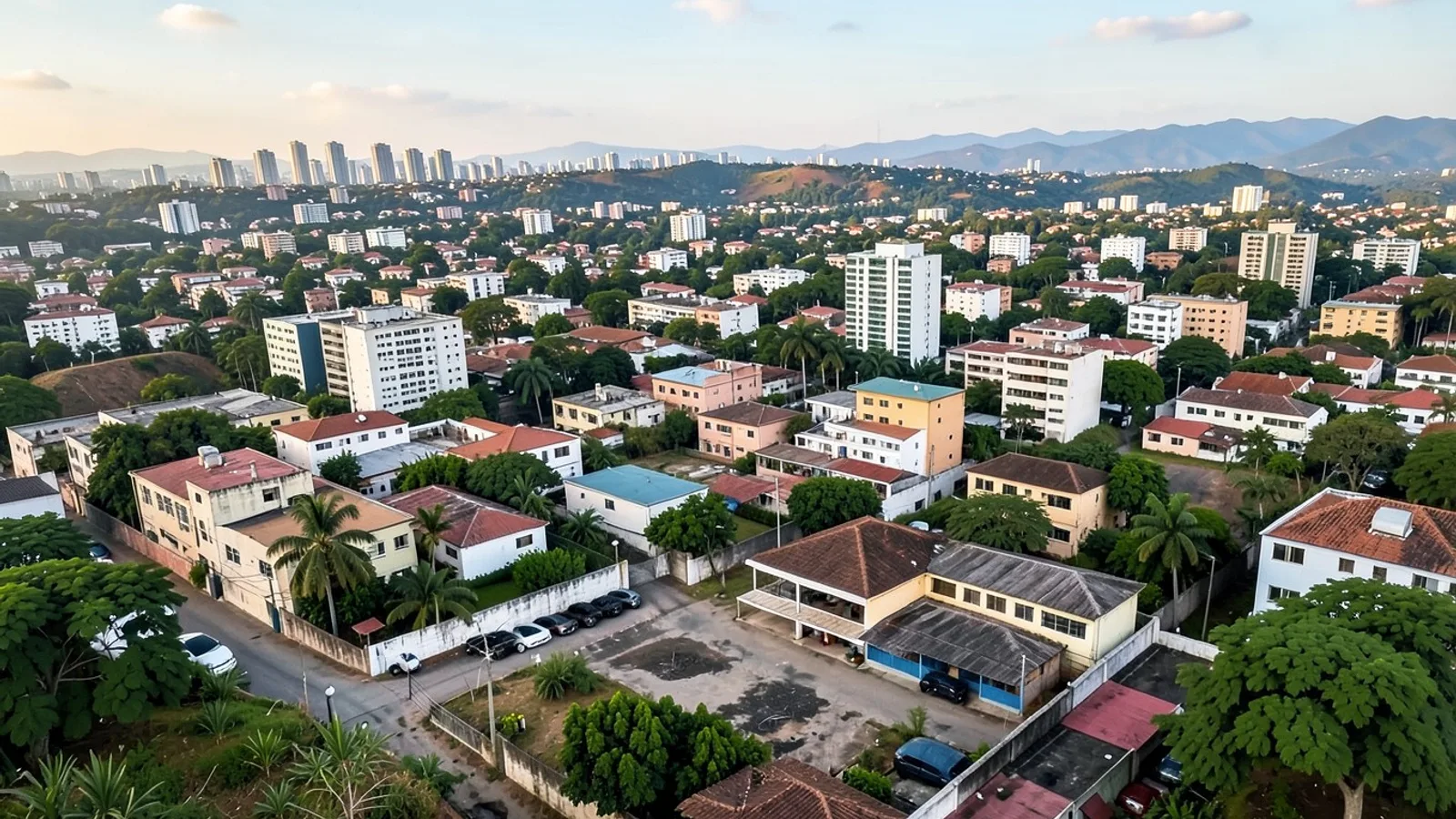
Facing a police summons, the execution of a search and seizure warrant, or an arrest in the act, the immediate intervention of a criminal defense lawyer becomes essential to safeguard individual rights, the presumption of innocence, and strict adherence to due process. In the municipality of Divinópolis, which has a population of 243,583 in the state of Minas Gerais, social coexistence, daily economic transactions, and regional circulation generate incidents that often require the intervention of the State Court. When state punitive power is activated against an individual or legal entity, the absence of specialized legal defense from the earliest investigative stages can lead to irreparable evidentiary harm and substantially undermine subsequent legal strategies.
The criminal field directly addresses the most sensitive legal interests protected by the 1988 Federal Constitution, with absolute emphasis on the right to freedom of movement, human dignity, and the right to a full defense with all inherent means and resources. Thus, the work of a criminal defense lawyer extends beyond mere passive attendance at hearings or police stations. Technical assistance involves a meticulous analysis of the legality of evidence collected by law enforcement, the full preservation of the chain of custody for material evidence, the timely challenge of abuses, and the development of robust legal arguments before first-instance courts and higher tribunals. In any intervention, the agreement must be established transparently, with fees set in writing before services begin, and without any promise or guarantee of a favorable outcome. To understand how to organize your consultation in the municipality, the interested party can access the platform in Divinópolis and evaluate the appropriate steps.
Fundamental prerogatives and the need for specialized criminal defense counsel
The false impression persists in society that hiring technical counsel should occur only after the formal filing and acceptance of criminal charges before one of the criminal courts. In procedural reality, the pre-trial phase—conducted through a police investigation or an incident report—is decisive in defining the factual scope of any accusation. Statements given under pressure without the assistance of a criminal defense lawyer, the inadvertent disclosure of mobile phone passwords, or the hasty signing of declaration forms can undermine defense arguments that would prove decisive in the course of the criminal action. Qualified technical counsel acts preventively and immediately, guiding the citizen on the legitimate exercise of the right to remain silent and on the principle against self-incrimination.
The Advocacy Statute, under the auspices of the Brazilian Bar Association (OAB), guarantees non-negotiable prerogatives to legal defense, such as full examination of the case records of ongoing investigative procedures, even when conducted confidentially, with the sole exception of ongoing measures whose prior disclosure could compromise their practical effectiveness. This guarantee allows the practitioner to examine witness statements, expert reports, and intelligence reports in advance before advising the client on their statements before the judicial authority or the police chief in charge of the investigation.
In situations involving an in flagrante arrest, holding a custody hearing represents an indispensable procedural milestone. Conducted before the competent judicial authority, this hearing aims to assess the strict legality of the arrest, the occurrence of physical abuse or abuse of authority, and the concrete presence of the requirements that would justify continued detention. The criminal defense lawyer intervenes on well-founded grounds to request the dismissal of the arrest in the event of illegality, the granting of provisional release with or without bail, or the imposition of precautionary measures alternative to detention, providing the judge with legitimate proof of permanent residence, lawful employment, and regular community ties.
When dealing with conduct classified as minor offenses, the case is referred to the Special Criminal Court (JECRIM), governed by Law 9,099/1995. In this environment guided by oral proceedings and the pursuit of alternative non-custodial solutions, the intervention of a qualified criminal defense lawyer carefully assesses the viability of beneficial mechanisms, such as civil damage settlements, criminal plea agreements, and conditional suspension of proceedings. Electing these legal options avoids the imposition of custodial or liberty-restricting sentences, but imposes formal requirements and restrictions that the interested party must understand in detail before entering into a commitment before the Public Prosecutor's Office and the judge.
Dynamics of proceedings and evidentiary hearings in the Judicial District of Divinópolis
After the formal charge is brought by the Public Prosecutor's Office and formally accepted by the court, the criminal action proper begins. The applicable procedural track is determined by the statutory penalty prescribed in the abstract for the offense, potentially following the ordinary procedure, the summary procedure, or special procedures provided for by specific statutes. The inaugural act of the defense in this procedural stage is the filing of the response to the accusation, a technical legal pleading in which the criminal defense lawyer must raise preliminary matters, argue nullities committed during the police investigation stage, list witnesses, and attach documentary evidence relevant to elucidating the facts.
In the evidentiary and sentencing hearing, the lawyer plays a decisive role by directly examining prosecution and defense witnesses, asking strategic follow-up questions, and advising the defendant during judicial interrogation. Technical vigilance to challenge leading or misleading questions, request supplementary expert examinations, and demonstrate any breaches in the chain of custody is essential to prevent the judgment from being based on weak, contradictory, or legally inadmissible evidence. Once the evidentiary phase is concluded, final arguments are presented in the form of written briefs, consolidating requests for acquittal, reclassification of the offense, or the application of mitigating factors.
For intentional crimes against life, jurisdiction belongs exclusively to the Jury Court, an institution guaranteed by the Federal Constitution that grants citizens the power to judge their peers. The Jury Court procedure is biphasic: in the first stage, the admissibility of the accusation is examined before a presiding judge, who decides on indictment, dismissal of charges, summary acquittal, or reclassification of the offense; in the second stage, the trial takes place in open court before the jury panel. Oral advocacy before the jurors demands thorough mastery of the case files, logical reasoning, and oratorical skill to demonstrate the defense's argument before lay jurors.
At the first-instance level of the State Court, procedural acts and hearings related to criminal cases in the Judicial District of Divinópolis concentrate their activities at the local courthouse, located at Avenida Dr. Paulo de Melo Freitas, 100 – Liberdade, Divinópolis - MG, CEP 35502-635. It is in this judicial unit that criminal proceedings, requests for precautionary measures, warrant executions, and Jury Court trials linked to the head district are processed.
Judicial jurisdiction and integration with neighboring municipalities
The geographic location of Divinópolis and its socioeconomic relevance in the Central-West region of Minas Gerais establish a constant, daily flow of people, goods, and vehicles with surrounding cities. This territorial contiguity directly impacts the distribution of criminal jurisdiction, which is established, primarily, by the place where the offense was consummated or where the last act of execution was carried out.
This dynamism is reflected in the neighboring relationship with the municipality of Carmo do Cajuru, located just 13.3 km from Divinópolis. The frequent transit of workers and residents between the two cities often results in police investigations with joint ramifications, such as the seizure of assets or hearings of individuals residing in different jurisdictions. The coordinated action of a criminal defense lawyer in Divinópolis aims to prevent duplicate precautionary orders and ensure that court registries respect proper territorial jurisdiction.
Another significant flow occurs toward Nova Serrana, a municipality located at a distance of 31.3 km from Divinópolis. Industrial activity and intense interstate and intermunicipal transport along this route frequently generate demands related to traffic checks, investigations into property crimes, and tax or economic investigative proceedings. When an event that occurred in the neighboring hub has repercussions involving court orders issued or executed in the central district, immediate professional monitoring safeguards defense deadlines and prevents disproportionate coercive measures against individuals who have legal residence and lawful ties.
Similarly, the interaction with the municipality of Itaúna, 33.7 km away from Divinópolis, creates frequent procedural connections in the criminal court routine. Commercial and university exchanges between the localities give rise to proceedings requiring the issuance of letters of request and the performance of shared evidentiary acts. The same phenomenon of integration is observed with the city of Cláudio, located 35.8 km away. In the event of appellate challenges against decisions rendered in the district, the case files may ascend for review before the Court of Justice of Minas Gerais (TJMG), located in the state capital, Belo Horizonte, or reach the Superior Court of Justice (STJ) and the Federal Supreme Court (STF), both located in the federal capital, Brasília.
Verification protocol for police approaches, warrants, and subpoenas
Upon becoming aware of a police investigation or receiving an official document issued by a judicial authority, remaining calm and acting in an orderly manner is essential to preserving the evidentiary foundations of the case. Adopting the following objective procedures is recommended:
- Do not give formal statements without legal assistance: when appearing before any police station or prosecuting agency, formally request the prior presence of a qualified professional before answering questions regarding the investigated facts;
- Check the identification details on the document: carefully verify the number of the police investigation or judicial proceedings, the originating court or police station, and the capacity in which the summons was issued, distinguishing whether the subpoena is as a witness, victim, or investigated person;
- Preserve messages, digital records, and files: keep chat history from messaging applications, emails, phone call logs, and geolocation receipts, as these timestamped records serve as indispensable documentary evidence to demonstrate the actual order of events;
- Gather identification documents and proof of community ties: obtain certified copies or originals of official identification documents, recent proof of residential address, and employment or professional records, which are crucial elements to support any requests for provisional release or the revocation of precautionary detention;
- Avoid making statements about the case on social media: maintain absolute discretion regarding the facts under investigation, refraining from posting rants, accusations, or comments on virtual platforms that could prematurely expose the defense strategy;
- Require a written legal fee agreement: ensure that all stages covered by the professional representation—such as monitoring the investigation, evidentiary hearings, and appellate measures—are clearly described, without improper promises of a favorable outcome in the case.
Following these precautions provides evidentiary security and enables the legal defense to prepare well-substantiated requests before the Public Prosecutor's Office and the Judiciary, safeguarding the citizen's rights in a steadfast and organized manner.
Professional practice, contractual formalization, and use of the application
The practice of criminal defense is guided by the strictest professional confidentiality, technical independence, and unwavering adherence to the ethical standards established by the Brazilian Bar Association (OAB). All information entrusted to the professional is confidential, assuring citizens the peace of mind to explain the truth of events fully and transparently. Under applicable ethical rules, no professional can guarantee an acquittal, immediate release, or predetermined outcome, as judgment rests solely with the courts of the Judiciary. For those who lack the financial resources to afford contractual fees, the Constitution guarantees the support of the Public Defender's Office for comprehensive free legal assistance.
Private retention requires fees to be agreed upon in advance and formalized in a written contract before defense activities actually begin, detailing explicitly which preliminary steps, court procedural acts, and potential appeals are covered by the agreed remuneration. If the situation involves ramifications in other areas of law, citizens may visit the main page to understand the general guidelines for contacting the corresponding legal specialties.
For those seeking fast, practical, and secure guidance in the district, the application provides a direct and private channel connecting individuals with legal professionals. Users describe what happened in their own words using voice or text messages, free of charge and without needing to create a login or password beforehand. Based on this account, an assistant organizes the information into an objective case summary and forwards the inquiry to lawyers practicing in the relevant legal field in their city.
Citizens have full autonomy to choose which professional they wish to speak with. The initial conversation takes place directly within the application, in a secure and protected environment, and the exchange of information proceeds only when both parties express consent, ensuring that personal contact details are not disclosed prior to this mutual agreement. Lawyers maintain published profiles on the platform displaying their respective practice areas and respond directly to consultation requests sent by users.
If you or a family member is facing a police investigation, has been subpoenaed to testify, or is facing criminal proceedings in the Judicial District of Divinópolis and surrounding region, access the application, describe your legal need straightforwardly, and select a criminal defense lawyer to answer your questions, assess the specific legal situation, and retain services with fees agreed upon in writing before work begins, without any promise of outcome.
Divinópolis and surroundings
Lawyers who practise in Divinópolis also take cases from nearby cities.
How it works
- Tell the case
By voice or text, no sign-in. It takes a few minutes.
- The assistant organises it
Facts, dates and documents become a clear summary.
- You choose the lawyer
Professionals who practise in Divinópolis, in alphabetical order.
Legalocal does not recommend or rank professionals: the list follows alphabetical order.
Frequently asked questions about Divinópolis
When is the right time to consult a criminal defense attorney?
Technical guidance from a criminal attorney should be sought from the very first police contact or investigative notice. Early intervention prevents evidentiary harm before the case is processed in the Judicial District of Divinópolis or reaches related matters in Carmo do Cajuru, located 13.3 km away.
How does criminal jurisdiction work when an investigation involves intermunicipal incidents?
Territorial criminal jurisdiction is established by the location of the offense's consummation or the final acts of execution. Facts investigated in neighboring municipalities, such as Nova Serrana, 31.3 km from Divinópolis, require careful analysis to determine whether procedural acts belong to the central judicial district or the originating jurisdiction.
Where do criminal hearings and trials take place in the judicial district?
Procedural acts, evidentiary hearings, and Jury Court sessions of the State Court are concentrated at the Courthouse of the Judicial District of Divinópolis, located at Avenida Dr. Paulo de Melo Freitas, 100 – Liberdade, also handling proceedings arising from diligences in nearby cities such as Itaúna, 33.7 km away.
How do you hire a criminal defense attorney and securely arrange legal fees?
Legal fees must be agreed upon and formalized in writing before professional work begins, detailing the stages covered. In accordance with ethical standards, no professional can guarantee outcomes or acquittals, and legal representation must be grounded in technical independence and professional confidentiality.